

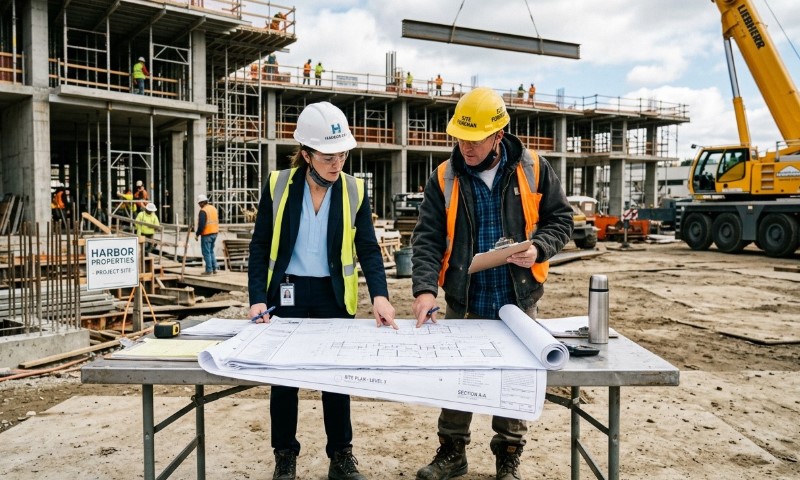
Construction projects can raise property value, improve returns, and help real estate investors enter growing markets. New builds can look especially attractive when housing demand is strong, and available inventory is limited.
U.S. housing data shows why many investors pay attention to construction. Housing starts increased, moving from about 1 million in 2014 to 1.36 million in 2024, a 36% gain.
Completed homes also increased, rising about 900,000 in 2014 to 1.45 million in 2024, a 61% gain.
Still, construction investing carries risks that can damage returns quickly.
Delays, cost overruns, weak contractor performance, financing pressure, zoning problems, material shortages, and changing demand can all turn a promising project into a financial loss.
Preventing that becomes an absolute must. Let’s see how that can be achieved.
Do Thorough Due Diligence Before Investing
Careful due diligence should come before any construction investment.
Investors need to review the property, location, market demand, zoning, permits, building plans, contractor history, and construction budget.
A stronger review should also look at risks that can affect value, rent potential, construction feasibility, and future resale.
- Environmental risks
- Tenant or lease obligations
- Market strength
- Local employment stability
- Neighborhood crime
- Nearby developments
Local demand matters as much as the building plan. Investors should study job growth, population trends, economic stability, competing developments, and neighborhood fundamentals.
Existing-home sales reached a seasonally adjusted annual rate of $4.26 million in February 2025, down 1.2% compared with February 2024. Total housing inventory reached 1.24 million units, up 17% compared with a year earlier.
Job growth and population trends are especially important signs of long-term housing demand.
Mid-construction deals require extra caution. Investors should inspect completed work and review existing project records before taking over.
- Existing contracts
- Change orders
- Permits
- Meeting minutes
- Quality-control reports
- Material substitutions
- Current plans and specifications
Buying a project mid-stream can reduce visibility into design coordination, construction quality, prior communications, and unresolved issues.
Hidden mistakes may already be built into the project, and correcting them later can be expensive.
Seller projections and contractor estimates should not be accepted without review. Independent inspections, third-party estimates, legal review, and market research can help investors avoid paying for assumptions that do not match reality.
Control Construction Costs and Timelines
Cost control starts with a realistic budget. Investors should include labor, materials, permits, design fees, financing costs, insurance, taxes, utilities, inspections, and a contingency reserve.
It must be said that construction costs made up 64.4% of the average price of a new home in 2024, compared with 60.8% in 2022. A larger cost share leaves less room for estimating errors, price increases, and change orders.
Contingency planning is essential because construction rarely moves exactly as planned. Several issues can raise costs or push out the completion date.
Recent builder survey data shows why contingency planning matters. In a January 2025 NAHB survey, 64% of builders said building material prices were a significant problem in 2024, 65% cited cost or availability of developed lots, and 64% cited cost or availability of labor.
Change orders need strict control. Every scope change should require written approval before work begins.
Specialized construction providers can also help investors compare project scope, pricing, materials, and delivery timing before committing.
Comparing published construction models can help investors evaluate how pricing, payment stages, materials, and delivery timelines are presented before they request bids or sign contracts.
For example, Elythera Investments lists steel-frame home pricing, estimated assembly timelines, and staged payment information, which are the kinds of details investors should review when checking project cost assumptions and contractor scope.
Contractor selection also affects profit. Investors should vet builders, general contractors, and subcontractors before work starts.
Licensing, insurance, past performance, references, financial stability, staffing, safety record, and experience with similar projects should all be reviewed.
Unfinished or delayed projects can happen for many reasons.
Common causes deserve attention before work begins or before an investor buys into a project already in progress:
- Lack of materials
- Natural events
- Bankrupt contractors
- Poor contractor performance
- Missing government approval
- Lack of funding
Construction delays and higher costs are among the biggest risks in new development.
Research on large construction projects shows how severe overruns can become. McKinsey found that 98% of megaprojects experience cost overruns of more than 30%, and 77% are at least 40% late.
Protect Cash Flow and Financing

Financing can make a construction project possible, but excessive debt can also create serious risk. Investors should avoid overleveraging and make sure the project can survive delays, weaker rents, slower sales, or higher costs.
Leverage can magnify losses if property values decline, interest rates rise, or cash flow weakens. Safer financing choices can help protect the project during vacancies or downturns.
Cash reserves should cover loan payments, taxes, insurance, utilities, maintenance, and unexpected construction delays.
A reserve equal to at least three to six months of expenses can help investors manage reduced rental income, repair costs, property taxes, and market downturns.
Loan terms deserve close review.
Financing risk has also increased because banks have been more cautious with commercial real estate credit. In the July 2025 Senior Loan Officer Opinion Survey, banks reported tighter standards and weaker demand for commercial real estate loans.
Investors need to know if financing includes variable rates, maturity deadlines, extension fees, refinance risk, prepayment penalties, or required completion dates.
Commercial real estate loan performance also shows why investors should keep reserves. Federal Reserve data tracks delinquency rates on commercial real estate loans, including construction and land development loans, multifamily loans, and nonfarm nonresidential real estate loans.
Rising rates can increase payments and reduce profitability.
Stress testing should happen before closing. Investors should test the project against conditions that could weaken the deal.
A project that only works under perfect conditions is too fragile. Safer deals can handle setbacks without forcing a distressed sale, missed loan payment, or emergency capital raise.
Reduce Legal, Insurance, and Property Risks
View this post on Instagram
Legal and insurance protection can keep one problem away from turning into a major loss. Investors should carry proper insurance during construction and after completion.
Coverage should match the project’s risk profile, especially when construction delays or income interruption could hurt returns.
Building coverage, liability protection, and rent-loss coverage can protect returns if storms, fires, lawsuits, or income interruptions occur.
Contractor risk should also be checked before work begins. Investors should verify licensing, insurance, lien waivers, and contractor ability to continue under any new ownership structure. Architects, designers, consultants, contractors, and subcontractors should also confirm if they are willing to keep working after ownership changes.
Legal review is important for contracts, permits, title issues, zoning, taxes, tenant rights, and regulatory compliance. Mistakes in these areas can lead to fines, lawsuits, forced modifications, lease disputes, deposit disputes, or eviction problems.
Attorney review, updated compliance knowledge, legally binding agreements, and documentation of transactions, repairs, and communications can reduce legal exposure.
Property condition also matters. Structural, environmental, and maintenance issues should be addressed early before they become more expensive.
Annual maintenance and unexpected repair budgets of 1% to 2% of property value can help investors plan for ongoing costs.
Small repairs can prevent larger losses. A roof repair completed early may cost only a few thousand dollars. Waiting too long could cost ten times more and also create interior damage.
Monitor the Market and Plan the Exit
Construction projects take time, and market conditions can change before completion.
Recent data shows how quickly supply conditions can shift:
- In March 2026, privately owned housing starts ran at a seasonally adjusted annual rate of 1.502 million, up 10.8% compared with March 2025.
- Completions were at a rate of 1.366 million, down 12.8% compared with March 2025.
Investors need to track signals that may affect rent, sale price, buyer demand, and refinancing options.
In February 2025, the U.S. median existing-home price was $398,400, up 3.8% year over year. Unsold inventory reached 1.24 million homes, equal to 3.5 months of supply.
Numbers like these can make new construction attractive, but they also show why market timing needs careful attention. Higher prices can support new projects, while rising inventory or weaker affordability can reduce buyer demand.
Marketing should start before completion. Leasing campaigns, buyer outreach, broker conversations, lender updates, and pre-sale efforts can reduce the time between completion and income generation.
Mid-stream construction deals can also create upside when managed well. A new owner may lease a building faster or secure higher rents than the original developer expected, adding value to the project.
Multiple exit options can protect investors if the original plan becomes less attractive:
- Selling
- Refinancing
- Leasing
- Holding long-term
Real estate can be illiquid, and selling may take months or even years. Rental income can offer an alternative if market conditions make a sale unattractive.
FAQs
Summary
Construction losses often happen when investors fail to plan for problems before they appear. Better preparation can reduce the damage caused by delays, cost increases, financing issues, vacancies, and market shifts.
Strong protection comes through due diligence, realistic budgeting, disciplined financing, clear contracts, insurance, maintenance planning, market monitoring, and multiple exit options.
New construction can strengthen a portfolio through property types such as single-family homes, multifamily properties, land, vacation rentals, commercial buildings, and industrial assets.