


Inflation keeps showing up in headlines. Prices move in ways that make people feel uneasy, even when the broader economy looks fine on paper. Investors reach for something steady when everyday costs feel unpredictable.
Gold often sits at the center of that conversation, partly because it carries a long record of holding purchasing power, and partly because it feels tangible in a world filled with digital balance sheets.
A smart allocation to precious metals in 2025 is less about chasing fear and more about building a buffer. A portfolio can handle stress far better when at least one part moves by a different rhythm than stocks and bonds. Gold has a habit of following that separate beat. That habit makes it worth a closer look.
Today, we will walk you through how gold behaves when inflation moves, how it interacts with other assets, and how to build a position without drifting into speculation. Think of it as a practical map for anyone who wants to work with something steadier than headlines.
Why Inflation Still Pushes Investors Toward Gold

Inflation does not need to hit extreme levels for people to feel pressure. Even moderate increases can make a paycheck feel thinner. Investors react by looking for assets that carry buying power from one year to the next without depending entirely on corporate earnings or interest rates.
Gold attracts attention because its supply grows slowly. Mining output cannot be rushed, no matter how big the demand spike. That slow growth makes gold harder to dilute. The metal also carries global acceptance. You can sell it in almost any region without worrying about local policy changes or accounting rules.
Many investors still turn to tangible assets during inflationary periods, much like choosing a timeless guld klocka dam that holds its appeal no matter what the market throws at them.
Several forces push investors toward gold when inflation rises:
- Lower confidence in currency purchasing power: A weaker currency makes gold look sturdy since gold is priced globally.
- Concerns about bond returns: Inflation erodes real bond yields. If the yield on a bond sits below inflation, investors often turn to gold for balance.
- Volatile equity markets: Earnings forecasts become harder when input costs keep rising. Gold does not rely on corporate margins.
- Flight to safety during policy uncertainty: When central banks adjust rates faster than expected, gold can absorb some of the emotional swings that follow.
Investors should view gold as a pressure valve. It may not always rise when inflation rises, but it helps reduce damage when other assets fail to keep pace.
How Gold Typically Behaves When Inflation Rises
Gold follows a pattern. Not a perfect one, but one that repeats often enough to guide decisions. It tends to respond to three areas: real interest rates, currency shifts, and investor sentiment.
Real Interest Rates Matter More Than Inflation Alone

Inflation grabs headlines. Real interest rates drive outcomes. A negative real rate means the return on safe assets sits below inflation. That makes gold more attractive.
When real rates turn positive and stay elevated, gold may slow down. Investors feel comfortable sitting in bonds again. A useful way to frame it: gold thrives when investors have few appealing safe alternatives.
Currency Weakness Can Amplify Gold’s Role
Gold is priced in dollars worldwide. A weaker dollar often boosts gold prices, partly because global buyers need fewer local currency units to afford it. A stronger dollar can slow that momentum.
In 2025, many central banks still adjust inflation targets, interest policies, and currency tools. Varied approaches create pockets of currency instability. Gold helps soften the impact.
Sentiment Shifts Bring Momentum
Gold carries a psychological component. People turn to it during uncertainty. When enough investors do the same, momentum builds on its own. Sentiment does not replace fundamentals, but it does shape shorter cycles.
Think of a portfolio that includes gold as a portfolio that accounts for emotional patterns in markets, not just numerical ones.
How Much Gold Belongs In A Portfolio In 2025

A precious metals allocation does not need to be large. The goal is not to outperform stocks or to replace bonds, but to create ballast.
Many financial planners suggest a modest range. Several studies over decades point to a 5 to 15 percent allocation as a sweet spot for risk reduction without sacrificing long-term returns.
Investors with heavy exposure to equities often prefer something closer to the upper end of that range. Investors who already hold alternative assets may lean lower.
A Simple Allocation Table
Below is a basic allocation example. It is not a prescription, only a reference.
| Investor Profile | Equity Share | Bond Share | Gold Share | Other Alternatives |
| Conservative | 40 to 50 percent | 40 to 50 percent | 5 to 10 percent | Minimal |
| Balanced | 55 to 65 percent | 25 to 30 percent | 5 to 12 percent | 3 to 5 percent |
| Growth Oriented | 70 to 80 percent | 10 to 15 percent | 10 to 15 percent | Small allocation to alternatives |
The key is consistency. A gold position works best when held through full cycles, not used as a short-term trade.
Physical Gold Or Digital Gold: Which Path Makes Sense
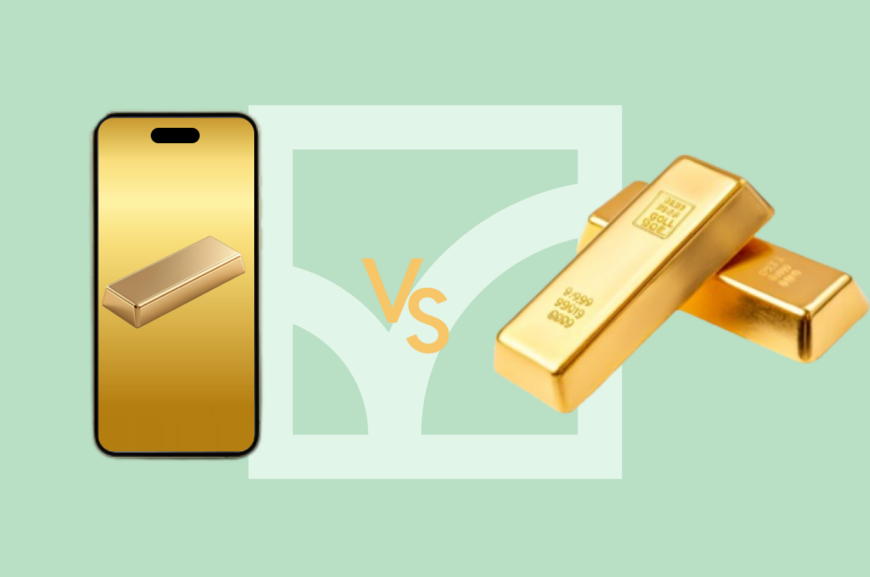
Investors often feel torn between holding something real or something convenient. Both options serve a purpose. The comparison below helps clarify the tradeoffs.
Physical Gold
Physical gold offers a sense of security. Bars and coins remove counterparty risk. You are not relying on a brokerage account or a commodity platform.
Advantages
- No digital intermediaries
- Long shelf life
- Works well for investors who prioritize independence
Drawbacks
- Requires safe storage
- Harder to sell quickly
- Premiums and transaction costs can eat into returns
Exchange Traded Funds Backed By Gold
ETFs backed by gold provide easy access to price movements without the storage burden. They track gold in a transparent way and allow investors to buy or sell in seconds.
Advantages
- High liquidity
- Lower transaction costs than physical gold
- Easy to integrate into diversified portfolios
Drawbacks
- Does not satisfy investors who prefer direct ownership
- Fund fees reduce returns slightly over long horizons
Gold Mining Stocks
Mining stocks behave differently. They reflect gold prices but also depend on production costs, management decisions, and market expectations. They can outperform during strong cycles but fall sharply during weak ones.
Investors should treat mining stocks as a separate category from gold itself. They belong in the equity section of a portfolio, not the hedge section.
How To Build A Gold Position Without Overexposing Yourself
A gold hedge works only when it stays balanced. A step-by-step approach keeps things clean.
Step 1: Pick A Long-Term Allocation Target
Most investors do well with a fixed target. Something like 8 percent or 10 percent offers clarity. When the percentage drifts, rebalance.
Step 2: Add In Intervals
Buying all at once increases timing risk. Gold prices fluctuate. Adding gradually over several months smooths the entry.
Step 3: Separate Hedging From Speculation
Hedging focuses on stability. Speculation focuses on outsized gains. Mixing both in one decision often leads to disappointment. Keep the hedge steady and treat any tactical moves as a different bucket entirely.
Step 4: Check Correlations With Your Existing Assets
Gold often moves independently, but correlations can shift. If your portfolio already includes inflation-protected bonds, commodities, or real estate, you may not need a large gold allocation.
Step 5: Revisit Your Allocation Annually
Inflation cycles evolve. So does your portfolio. A yearly review keeps gold in proportion with your goals.
How Precious Metals Work Together Beyond Gold Alone

Silver, platinum, and palladium also respond to inflation, but each carries an industrial role. When manufacturing demand rises, silver may outperform gold. When auto production changes, platinum group metals may surge or fall.
A diversified precious metals basket can help investors who want exposure beyond gold but do not want to predict which metal will outperform.
Key Characteristics
| Metal | Primary Role | Inflation Behavior | Volatility Level |
| Gold | Monetary metal | Strong hedge potential | Moderate |
| Silver | Industrial and monetary | Hedge potential with higher swings | High |
| Platinum | Industrial | Less consistent as a hedge | High |
| Palladium | Industrial | Driven mainly by auto sector demand | Very high |
A simple rule helps: gold stabilizes, silver amplifies. Platinum and palladium are better suited for investors who follow industrial trends closely.
Practical Scenarios Where Gold Helps In 2025
Investors face several real-world problems in 2025 that push gold forward as a hedge.
Scenario 1: Rising Real World Prices With Sticky Interest Rates
When central banks hesitate to lower rates but consumer prices still climb, bond yields may feel stagnant. Gold helps maintain real purchasing power during those stretches.
Scenario 2: Currency Volatility Across Regions
Global currency shifts can affect international investments. Gold carries no national stamp, so it counters local currency swings.
Scenario 3: Geopolitical Events That Trigger Market Stress
Markets react quickly to geopolitical surprises. Gold reactions often move in the opposite direction of falling stock markets during those moments. A modest allocation reduces emotional decision-making during turmoil.
Scenario 4: Portfolios With Heavy Exposure To Growth Stocks
Growth-oriented portfolios shine during expansion cycles but struggle when inflation weighs on earnings. Gold creates space for those portfolios to breathe during stress periods.
Final Thoughts
Gold earns its place in a portfolio by reducing stress, not by delivering excitement. A thoughtful allocation helps carry purchasing power across unpredictable cycles, especially when inflation pushes everyday prices higher.
Investors gain flexibility when part of the portfolio responds differently to shocks. They gain calm when they know at least one asset moves independently of earnings forecasts or bond markets.
A measured approach works best. Pick a target percentage, add gradually, and treat gold as the stabilizing layer rather than the star of the show. The reward is a portfolio that holds together when inflation pressures feel heavy.